Contact Houston Dental Implants & Prosthodontics | Memorial City
- 713-464-6335
-
Memorial Hermann Memorial City
Medical Plaza 3
915 Gessner Road, STE. 515
Houston, Texas 77024 - markstankewitz515@gmail.com
The cost of full mouth dental implants in Houston varies depending on whether one or both arches are treated, the number of implants needed, surgical requirements, and the design and materials used for the final restoration. Because full-mouth implant treatment is customized to each patient, there is no single fee that applies to every case.
At Houston Dental Implants & Prosthodontics, treatment is planned around your anatomy, bite, restorative needs, and desired final result. This guide explains the major factors that affect full mouth dental implant cost and what to consider when comparing treatment options.
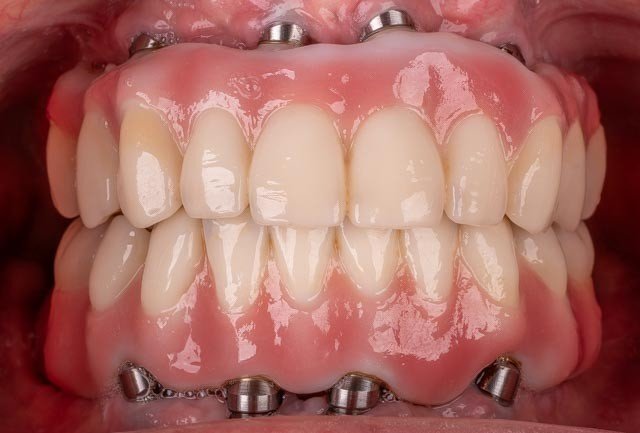
Full mouth dental implants replace most or all of the teeth in an upper arch, lower arch, or both using dental implants to support the replacement teeth. Treatment may involve different implant numbers, surgical approaches, and restorative designs depending on the patient’s anatomy and needs.
Because there are several ways to restore a full arch with dental implants, the treatment selected can have a significant effect on the overall cost. For a detailed explanation of the treatment itself, see our Full Mouth Dental Implants in Houston page.
Patients considering a fixed full-arch solution can also learn more about All-on-4 dental implants in Houston.
There is no single price for full mouth dental implants because the treatment can vary substantially from one patient to another. The overall cost depends on whether one or both arches are treated, the number and position of implants, surgical requirements, the type of temporary restoration, and the design and materials used for the final prosthesis.
This also makes advertised prices and treatment estimates difficult to compare directly. Two treatment plans may appear similar while including different surgical procedures, numbers of implants, temporary restorations, final materials, laboratory services, or levels of restorative care.
For that reason, we provide a personalized treatment plan after evaluating your anatomy, bite, existing teeth, bone support, and restorative needs. The goal is to clearly explain the recommended treatment and what is included so you can evaluate the overall treatment—not simply a headline price.
Several surgical and restorative factors can affect the overall cost of full mouth dental implant treatment, including:
A patient with significant wear, bite collapse, or long-term tooth loss may need more comprehensive planning than someone with a simpler full-arch case.
Whether treatment involves one arch or both arches can have a significant effect on the overall cost and complexity of full mouth dental implant treatment.
When treatment is limited to either the upper or lower arch, the treatment plan involves restoring that single arch and coordinating it with the opposing natural teeth or existing restorations. The number of implants, surgical requirements, temporary teeth, and final prosthesis all contribute to the cost of the individual case.
When both the upper and lower arches require treatment, planning becomes more comprehensive because both arches must be designed to function together. Implant placement, tooth position, bite relationships, facial support, esthetics, temporary restorations, and the final prostheses must all be coordinated as part of the overall treatment plan.
When comparing full mouth dental implant treatment, it is important to understand exactly what is included in the proposed fee. Treatment plans may differ in the surgical, restorative, laboratory, and follow-up services they include.
Depending on the case, treatment may include:
Temporary restorations are an important part of full-arch implant treatment because they allow the appearance, tooth position, bite, function, and facial support to be evaluated during the healing phase before the final restoration is completed.
Our treatment process includes two temporary restorations when appropriate. This provides an additional opportunity to evaluate and refine the restorative design before fabrication of the final prosthesis.
It is important to understand exactly what is included in your treatment plan so you can compare options accurately.
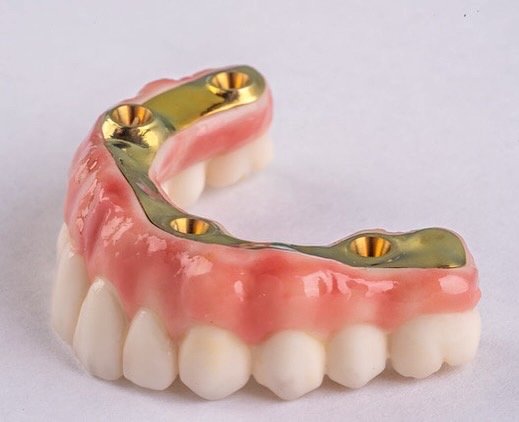
The material and design of the final full-arch prosthesis can affect both treatment cost and the characteristics of the completed restoration. Different materials vary in fabrication requirements, strength, esthetics, wear characteristics, and how they are incorporated into the overall restorative design.
Zirconia is one material that may be used for a final fixed full-arch restoration. Material selection should be based on the individual patient’s bite, restorative space, esthetic goals, functional requirements, and overall treatment plan rather than cost alone.
The right material depends on:
These differences are another reason two full-mouth implant treatment estimates may not be directly comparable simply because both are described as “full mouth dental implants.”
Full mouth dental implant treatment involves more than the surgical placement of implants. The final teeth must also be designed around the patient’s bite, facial support, tooth position, esthetics, restorative space, and long-term function. The amount of restorative planning and laboratory work included in treatment can therefore affect both the treatment process and overall cost.
As a board-certified prosthodontist, Dr. Mark Stankewitz plans treatment from the intended final restoration backward. Implant position, temporary restorations, bite relationships, and the design of the final prosthesis are coordinated around the desired restorative result.
Our on-site dental laboratory also allows Dr. Stankewitz to remain directly involved in the design and refinement of the restoration throughout treatment. When comparing treatment estimates, consider not only the number of implants being placed, but also who is planning, designing, and managing the restorative phase of treatment.
Whether full mouth dental implants are worth the investment depends on the patient’s needs, treatment alternatives, and long-term goals. For someone struggling with failing teeth or unstable removable dentures, the ability to restore an entire arch with a stable implant-supported restoration can provide meaningful improvements in function, comfort, and confidence.
Cost should also be considered in the context of what the treatment includes. Implant number, surgical procedures, temporary restorations, final prosthesis materials, restorative planning, laboratory work, and follow-up care can all affect both the treatment provided and the overall investment.
The goal is not simply to choose the least expensive treatment, but to understand the available options and select an approach that provides an appropriate balance of function, esthetics, maintainability, and long-term value for your individual situation.
Traditional dentures generally have a lower initial cost than full mouth dental implant treatment because they do not require implant surgery or a fixed implant-supported prosthesis. Full-mouth implant treatment involves additional surgical, restorative, and laboratory procedures, which contributes to the higher initial investment.
When comparing costs, it is also important to consider the type of restoration, anticipated maintenance, and long-term restorative needs. Traditional dentures may require adjustments, relines, repairs, or replacement over time, while implant-supported restorations have their own professional maintenance and potential repair or replacement requirements.
Patients comparing treatment costs may also want to consider implant dentures in Houston. Removable implant-supported dentures can provide greater stability than traditional dentures while offering a different restorative approach from fixed full-arch implant treatment. The overall investment depends on the number of implants, surgical requirements, attachment system, and design of the final denture.
The appropriate choice should be based on more than initial cost alone. Treatment should be evaluated according to your oral health, functional needs, preferences, restorative goals, and the long-term maintenance required for each option.
Dental insurance typically provides little or no coverage for the restorative portion of comprehensive full mouth dental implant treatment. When restorative benefits are available, they are often small relative to the overall cost of treatment.
For some patients, the more meaningful insurance benefit may apply to portions of the surgical treatment performed by the oral and maxillofacial surgeon, such as extractions or other covered surgical procedures. Coverage varies considerably by plan and by the procedures required.
Our office discusses available dental insurance benefits with patients as part of treatment planning. The oral surgeon’s office can also help determine what benefits may apply to the surgical portion of treatment.
Third-party financing may be available for patients who prefer to spread treatment costs over time. Financing is provided by independent financing companies and is subject to their approval, terms, and conditions. Our team can provide information about the third-party financing options available to patients considering full mouth dental implant treatment.
When comparing full mouth dental implant treatment, the total price alone may not tell you whether two treatment plans are equivalent. Before comparing estimates, make sure you understand what treatment, materials, and services are actually included.
Two treatment plans described as “full mouth dental implants” may include very different surgical, restorative, and laboratory services. Understanding these differences can help you compare treatment options more accurately and make a decision based on the complete treatment plan rather than price alone.
If you are considering full mouth dental implants, a personalized evaluation can help determine the type of treatment appropriate for you and what will be included in your treatment plan. Dr. Mark Stankewitz will evaluate your restorative needs and explain the recommended approach so you can understand the treatment, anticipated costs, and long-term considerations before making a decision.
Call 713-464-6335 to schedule your consultation.The cost of full mouth dental implants in Houston varies because treatment is customized to the individual patient. Cost can be affected by whether one or both arches are treated, the number of implants needed, surgical requirements, temporary restorations, the material and design of the final prosthesis, and the complexity of restorative treatment. A comprehensive evaluation is necessary to determine the appropriate treatment plan and its cost.
Treatment plans described as “full mouth dental implants” may not include the same procedures, materials, or services. Differences can include the number of implants, surgical procedures, temporary restorations, final prosthesis materials, laboratory services, restorative planning, and follow-up care. When comparing estimates, it is important to understand exactly what is included rather than comparing the total price alone.
Yes. Treating both the upper and lower arches generally involves more extensive surgical, restorative, and laboratory treatment than restoring a single arch. Two-arch treatment also requires careful coordination of the bite, tooth position, function, and esthetics between both restorations.
Dental insurance typically provides little or no coverage for the restorative portion of comprehensive full mouth dental implant treatment. When restorative benefits are available, they are often small relative to the overall cost. For some patients, more meaningful benefits may apply to portions of the surgical treatment performed by the oral and maxillofacial surgeon. Coverage varies by plan and by the procedures required.
Third-party financing may be available for patients who prefer to spread treatment costs over time. Financing is provided by independent financing companies and is subject to their approval, terms, and conditions. Our team can provide information about the third-party financing options available to patients considering full mouth dental implant treatment.
The value of full mouth dental implant treatment depends on your individual needs, treatment alternatives, and long-term goals. For patients with failing teeth or unstable removable dentures, a fixed implant-supported restoration may provide meaningful improvements in stability, function, comfort, and confidence. The decision should consider not only the initial cost, but also the treatment provided, restorative design, maintenance requirements, and long-term expectations.